
Last 7 gamesCold ↘
1-for-5 · 1 RBI (9/7 vs MIN)
See today's at-bats →1-for-5 · 1 RBI (9/7 vs MIN)
See today's at-bats →Wed, 9/9, 08:40 AM JST
vs Pittsburgh Pirates
See game info →Career Hits — 100 H
18 H to go
home runs and OPS and SLG rank in the top 19% of MLB. OBP also ranks in the top 30%, with no clear weak spot.
Bars show percentile rank among MLB-wide qualified players.
See Statcast metrics, platoon splits, and pitch-mix breakdowns in one place.
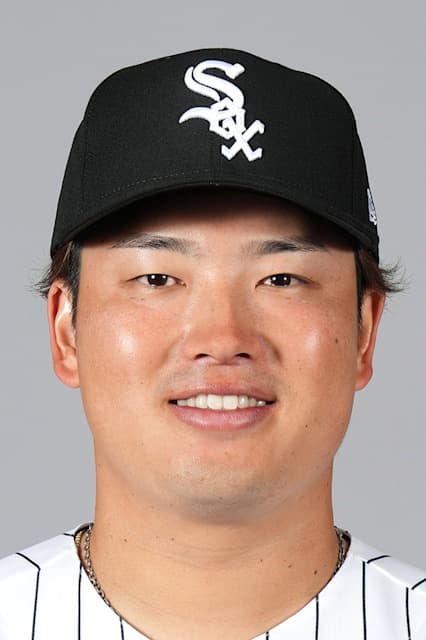
View the full analysis →A left-handed slugger who won the NPB Triple Crown with a Japanese-record 56 home runs for the Tokyo Yakult Swallows in 2022, Murakami delivered the walk-off hit that clinched Japan's 2023 WBC title. He began his MLB career with the White Sox in 2026. This page tracks his season stats, batting data, and career totals, updated daily.
Murakami's 2026 defensive metrics are shown in the "2026 Defensive Summary" H2 section and the "Defensive Metrics (OAA)" card on this page. OAA (Outs Above Average) is Statcast's official MLB defensive metric, measuring how many outs a fielder records above what an average fielder would. DRS (Defensive Runs Saved) is the FanGraphs-side counterpart converted to a runs-prevented scale — this site shows Fielding Runs Prevented as a directly comparable proxy. Data is sourced from Baseball Savant's public leaderboard and refreshed every Monday. As a first baseman, his OAA scale is naturally compressed compared to outfielders, but the Fielding Runs Prevented value gives a clean read on his actual defensive contribution.
Murakami's latest 2026 stats — batting average, home runs, RBI, and OPS — are updated daily in the stats box at the top of this page. As the centerpiece of the rebuilding White Sox lineup, every game result is tracked here in real time.
wRC+ (weighted Runs Created Plus) is the most comprehensive single batting metric — it measures a hitter's total offensive value adjusted for ballpark and league context, with 100 being average. A wRC+ of 120+ indicates an above-average hitter; 150+ is MVP caliber. OPS+ is similar, adjusting OPS for park and era. Murakami's NPB OPS in 2022 was 1.031 — a historically elite number even by MLB standards. Projecting to a wRC+ of 120–140 after MLB adjustment would confirm his status as a franchise-caliber hitter for the White Sox.
The three main adjustments for Murakami in 2026 are: (1) elite velocity breaking balls — MLB sliders and cut fastballs are harder and have sharper movement than their NPB counterparts; (2) adapting to an MLB zone that can be tighter inside; and (3) sustaining production over 162 games. His key advantage is a balanced left-handed swing that generates power to all fields — not just pull-side home runs. Like many NPB hitters, expect a slower April–May adaptation period followed by stronger numbers from June onward.
In 2022, Murakami hit 56 home runs for the Yakult Swallows — the most by any Japanese-born player in a single NPB season — while also winning the Triple Crown with a .318 batting average and 134 RBI. His 56 HR surpassed Sadaharu Oh's long-standing record of 55 for a Japanese left-handed batter. The Triple Crown (leading the league in batting average, home runs, and RBI simultaneously) had not been won in NPB since 2004, making it one of the rarest and most celebrated achievements in modern Japanese baseball.
In the 2023 World Baseball Classic final between Japan and the United States, Murakami delivered a walk-off hit in the bottom of the 9th inning with two outs and a runner on base to clinch Japan's championship. The at-bat — coming against Mike Trout as the final out of the series — is remembered as the "at-bat of the century" in Japan and cemented Murakami's status as a national hero alongside Shohei Ohtani.
The "Season Analysis" section of this page shows monthly charts for batting average, home runs, and OPS. Tracking the month-by-month trend is particularly useful for NPB imports — many post slow April–May numbers during the adjustment phase before surging in June and beyond. Home vs. away splits at Rate Field (one of the AL's more homer-friendly parks) are also worth watching.
Murakami slots in as the White Sox's 3rd or 4th hitter — the traditional "heart of the order" — and is expected to serve as the face of the franchise during their rebuild. Chicago is counting on him to drive in runs, produce on-base percentage, and mentor younger hitters around him. His home park, Rate Field, has a notably short right field porch (330 feet) that should help his pull-side power. Sustaining production across the full 162-game MLB schedule is the biggest physical and mental challenge for any NPB import, but his youth (26 years old in 2026) gives him an edge.
Murakami profiles as a high-ISO, above-average BB%, all-fields power hitter in sabermetric terms. His NPB 2022 ISO (isolated power = SLG − AVG) exceeded .330 — equivalent to the top 5% of MLB. Even with an NPB-to-MLB translation discount, a .200–.250 MLB ISO is a realistic projection. His barrel rate (the percentage of batted balls hit at optimal exit velocity and launch angle) should be above MLB average, which means loud contact to all parts of the park regardless of ballpark dimensions. The main statistical vulnerability to monitor is his contact rate against low-and-away breaking balls — a zone that NPB pitchers also exploited against him at times. If he limits strikeouts on that pitch, a career .850+ OPS in MLB is within reach.
The closest MLB historical comparison for Murakami is Hideki Matsui (Yankees, 2003–2012), a left-handed power hitter who posted a career .799 OPS across 10 MLB seasons. But Murakami's raw power profile — 56 NPB home runs, .330 ISO — exceeds Matsui's NPB output at the time of his MLB transition. Unlike Shohei Ohtani (a special two-way case), Murakami is a pure DH/first baseman type, making Matsui the fairest comparison. Among all Japanese position players who have come to MLB, Murakami's power ceiling is arguably the highest. At 26 years old in 2026, he also has more runway to develop than many NPB imports who arrived in their late 20s or early 30s.
Murakami's today plate appearances (AB, hits, HR, RBI) are updated daily on the dedicated "Today" page. Pitch-by-pitch breakdowns, exit velocity, opposing pitcher arsenal, splits vs RHP/LHP, and a Unico AI analysis are all included. Live in-play updates run during the game; final results are posted by 18:00 JST.
Munetaka Murakami plays for the Chicago White Sox, slotting in as the 3rd or 4th hitter and the centerpiece of their lineup. He signed with Chicago after the 2025 NPB season via the posting system. He bats and throws left-handed and serves primarily as a third baseman / first baseman in 2026.
Get game results, milestone updates, and next start info on X.
Follow Munetaka Murakami