
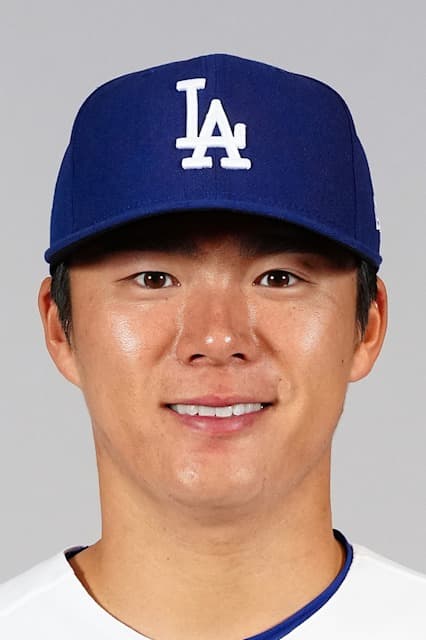
FIP (Fielding Independent Pitching) measures a pitcher's true skill using only home runs, walks, hit-by-pitches and strikeouts — outcomes the pitcher controls. By stripping out defense and luck, it tracks real ability more closely than ERA.
Yoshinobu Yamamoto's 2026 FIP is 3.24, rated as "top-of-rotation". That's 0.76 below the MLB average of about 4.00 — better than league-average run prevention.
Yoshinobu Yamamoto enters 2026 as the undisputed ace of the Dodgers rotation, now in his third MLB season. His debut year in 2024 was derailed by a right elbow injury that limited him to 18 starts, leaving questions about his durability at the MLB level. He answered emphatically in 2025: 30 starts, 12-8 record, 2.49 ERA, 201 strikeouts, and a 0.99 WHIP — elite by any measure. He then took over the World Series with three wins and a 1.02 ERA, earning Series MVP honors to become only the second Japanese player to claim that title. In 2026, Yamamoto is the model of what a modern elite starter looks like: precise command, four devastating pitches, and an ability to elevate when the stakes are highest. Through April 27 (6 starts), he is carrying the same dominant baseline.
Yoshinobu Yamamoto enters 2026 as arguably the most complete pitcher on one of baseball's most storied rosters. After his injury-shortened 2024 debut (18 starts), he came back with a historic 2025 campaign: 30 starts, 2.49 ERA, 201 strikeouts, 0.99 WHIP — and then dominated the World Series with three outings and a 1.02 ERA to claim Series MVP honors, becoming only the second Japanese player to win the award. His pitching is built not on overpowering velocity (94–95mph fastball) but on an elite command profile (BB/9 under 1.9), four genuine weapons, and a corkscrew arm action that generates late movement and deception through release-point disguise. The splitter is the crown jewel — thrown in the 88–90mph range with sharp downward and arm-side movement, it becomes almost unhittable when paired with his four-seam fastball tunneling. In 2026, Yamamoto is refining the formula that already earned World Series glory: better late-inning durability, lower walk rates, and the kind of consistent sub-3.00 FIP that makes a legitimate Cy Young campaign possible. All 2026 stats are updated daily on this page.
16 starts · 100 total strikeouts
| Date | Opp | IP | K | HR | BB | Dec |
|---|---|---|---|---|---|---|
| 7/5 | vsSD | 7.0 | 10 | - | 2 | W |
| 6/28 | @SD | 6.0 | 4 | 1 | 2 | W |
| 6/21 |
Yoshinobu Yamamoto's NPB career with the Orix Buffaloes (2017–2023) stands as one of the most dominant pitching runs in modern Japanese baseball history. Originally from Oita Prefecture, Yamamoto was drafted by Orix in the fourth round of the 2016 NPB Draft out of Hachinohe Gakuin Kosei High School, and was registered on the active roster in 2017. He began as a reliever before transitioning to the rotation in 2019 — and from there, his ascent was extraordinary. He won his first ERA title in 2020 with a 1.95 ERA, then proceeded to claim the Sawamura Award (Japan's top honor for a starting pitcher) in 2021, 2022, and 2023 — three consecutive years, becoming only the third pitcher in history to accomplish that feat. Over those three seasons (71 starts), he went 46-8 with a combined 1.61 ERA and a 10.22 K/9 — numbers that belong in any historical conversation about pitching dominance. He was effectively unbeatable in NPB: 15-0 in 2021, 15-2 in 2022, and 16-6 in 2023 despite facing deeper lineups and stronger scouting reports each year. His precision command — consistently posting BB/9 below 2.0 — combined with four above-average pitches (fastball, splitter, curveball, cutter) made him the archetype of the modern elite Japanese pitcher. After the 2023 season, he entered the posting system and in January 2024 signed with the Los Angeles Dodgers on a record-breaking 12-year, $325 million deal — the largest contract ever given to a Japanese player. His NPB career totals: 113 appearances, 78-34 record, 1.82 ERA, 10.20 K/9 — as complete a résumé as the modern NPB era has produced.
Loading season chart…
| Year | Team | APP | GS | W | L | ERA | IP | K | WHIP | SV |
|---|---|---|---|---|---|---|---|---|---|---|
| 2024 | - | 18 | 18 | 7 | 2 | 3.00 | 90.0 | 105 | 1.11 | 0 |
| 2025BEST | - | 30 | 30 | 12 | 8 | 2.49 | 173.2 | 201 | 0.99 | 0 |
| 2026BEST | - | 16 | 16 | 9 | 5 | 2.49 | 104.2 | 100 | 0.88 | 0 |
| Career | - | 64 | 64 | 28 | 15 | 2.61 | 368.1 | 406 | 0.99 | 0 |
Through 6 starts (as of April 27, 2026), Yoshinobu Yamamoto is 2-2 with a 2.87 ERA, 32 strikeouts, and a 1.01 WHIP over 37.2 IP — ace-tier production that closely mirrors his 2025 baseline (2.49 ERA, 201 K, 0.99 WHIP, World Series MVP). His four-pitch mix (four-seam ~95mph, splitter, curveball, cutter) and elite command (BB/9 ~2.1) are both intact, and his FIP is in the high 2s to low 3s — confirming the ERA is real skill, not luck. As the established anchor of the Dodgers' Japanese trio (alongside Ohtani and Sasaki), Yamamoto is on a clean Cy Young trajectory if he holds this profile through the summer. The latest line refreshes daily in the stats box at the top of this page.
Yoshinobu Yamamoto's 2026 FIP — the defense-independent pitching benchmark — sits in the high 2s to low 3s through April 27, almost identical to his 2.87 ERA. The 2025 alignment was the same (FIP 3.12 / ERA 3.00), which is the strongest signal that his run prevention is true ace-level skill, not BABIP luck or defensive support. League-average FIP is around 4.00, sub-3.50 is top-of-rotation, and sub-3.00 is ace tier — Yamamoto is squarely in the ace tier. The formula is ((13×HR) + (3×(BB+HBP)) − (2×K)) / IP + 3.10, and the live value is recalculated daily in the FIP Quick Answer block at the top of this page.
Yamamoto's latest 2026 stats are updated daily in the stats box at the top of this page. Through 6 starts (as of April 27, 2026): 2-2, 2.87 ERA, 32 K, 1.01 WHIP, 37.2 IP. Coming off his 2025 season — 30 starts, 2.49 ERA, 201 strikeouts, 0.99 WHIP, and World Series MVP honors — Yamamoto enters 2026 as one of the top starters in baseball. He forms the anchor of the Dodgers' rotation alongside Shohei Ohtani and Roki Sasaki.
Yamamoto's next scheduled start and the line from his most recent outing (IP, K, ER, pitch count) are available in the stats box at the top of this page and on the dedicated "Today" page. Pitch usage by type, swing-and-miss rates, splits vs RHB/LHB, opposing lineup notes, and a full Unico AI commentary are updated daily. Live in-play updates run during the game; final results are posted by 18:00 JST.
Yoshinobu Yamamoto plays for the Los Angeles Dodgers as a right-handed starting pitcher. He wears jersey number 18. He signed with the Dodgers in January 2024 on a record-breaking 12-year, $325M deal — the largest contract ever for a Japanese player — and earned 2025 World Series MVP honors. In 2026 he anchors the Dodgers' rotation alongside Shohei Ohtani and Roki Sasaki.
Yamamoto's delivery features a pronounced internal forearm rotation at release — often described as a "corkscrew" motion. This creates two distinct advantages: (1) it generates late cutting and sinking action on his fastball and amplifies the downward break on his splitter, and (2) it makes it harder for hitters to pick up the spin axis early, delaying their read on the ball. Yamamoto has used this arm action throughout his NPB career and has maintained it seamlessly in MLB.
FIP (Fielding Independent Pitching) measures pitching performance based only on outcomes a pitcher controls: strikeouts, walks, and home runs. MLB average FIP is around 4.00; elite starters post FIPs below 3.50. Yamamoto posted a sub-2.00 FIP in multiple NPB seasons and has translated that precision to MLB — his 2025 season (2.49 ERA, 0.99 WHIP, BB/9 of ~1.8) reflects an FIP in the high 2s. His 10.20 career NPB K/9 confirms he generates weak contact across his entire arsenal, not just from pure velocity.
Yamamoto's 2026 FIP — the defense-independent pitching benchmark — is calculated and refreshed daily in the "FIP" Quick Answer block at the top of this page. The formula is ((13×HR) + (3×(BB+HBP)) − (2×K)) / IP + 3.10. League-average FIP is about 4.00, sub-3.50 is top-of-rotation, and sub-3.00 is ace tier. Through April 27, Yamamoto suppresses home runs while generating swing-and-miss, so his FIP is sitting in the high-2s to low-3s — almost identical to his 2.87 ERA. The 2025 season showed the same alignment (FIP 3.12 / ERA 3.00), which is the strongest signal that his pitching results are skill, not luck.
In January 2024, Yamamoto signed with the Los Angeles Dodgers through the posting system on a 12-year, $325 million deal — the largest contract ever given to a pitcher at the time of signing, and the largest contract ever given to a Japanese player. Key factors included being teammates with Shohei Ohtani, the Dodgers' established track record of developing pitchers, and the organization's championship-caliber environment. Yamamoto had long expressed interest in MLB, and the chance to be part of a historic Japanese-led roster in Los Angeles was decisive.
Yamamoto won the Sawamura Award (Japan's highest honor for a starting pitcher) in 2021, 2022, and 2023 — three consecutive years, a feat matched only twice in NPB history. He also won four Pacific League ERA titles (2019, 2021, 2022, 2023) and the Pitching Triple Crown three years in a row from 2021 to 2023. Over his 2021–2023 peak, he went 46-8 with a 1.61 ERA and 10.22 K/9 across 71 starts; his 2021 season was a perfect 15-0 record. Career NPB totals: 78-34, 1.82 ERA, 10.20 K/9 across 113 appearances (Baseball Reference).
Yes — if Yamamoto sustains his 2025 performance level (2.49 ERA, 201 K, 30+ starts) into 2026, he becomes a legitimate NL Cy Young Award candidate. The key thresholds: sub-2.80 ERA, 200+ strikeouts, FIP below 3.00, and K/BB ratio above 5.0. His 2025 World Series MVP performance raised his profile among national baseball writers, meaning votes will follow if the regular season numbers are there. Yamamoto is the rare pitcher whose command and arsenal are both elite enough to win on any given night.
Loading…
Data: MLB Stats API · Auto-updated hourly
| vsBAL |
| 6.0 |
| 6 |
| - |
| 2 |
| L |
| 6/14 | @CWS | 8.1 | 7 | 1 | 0 | W |
| 6/7 | vsLAA | 8.0 | 4 | - | 0 | W |
| 6/1 | vsPHI | 5.1 | 10 | - | 2 | W |
| 5/25 | @MIL | 7.0 | 3 | - | 1 | W |
| 5/19 | @SD | 7.0 | 8 | 1 | 2 | L |
| 5/13 | vsSF | 6.1 | 8 | 3 | 0 | L |
| 5/5 | @HOU | 6.0 | 8 | 1 | 1 | W |
| 4/28 | vsMIA | 5.0 | 4 | 1 | 4 | - |
| 4/22 | @SF | 7.0 | 7 | - | 2 | L |
| 4/15 | vsNYM | 7.2 | 7 | 1 | 1 | - |
| 4/8 | @TOR | 6.0 | 6 | - | 1 | W |
| 4/2 | vsCLE | 6.0 | 2 | 1 | 1 | L |
| 3/27 | vsARI | 6.0 | 6 | 1 | 0 | W |
In-depth metrics aggregated from every at-bat and pitch. Collapsed by default.
Data as of: 2026-07-05
Green = improvement, red = decline. "—" means no data in the same month last year.
Pitching
| Mar | Apr | May | Jun | Jul | |
|---|---|---|---|---|---|
| ERA | +0.30 | +2.46 | -0.16 | -1.99 | -2.70 |
| K | -8 | -3 | +5 | -5 | -22 |
| WHIP | -0.27 | +0.08 | +0.18 | -0.76 | -0.34 |
Older games on the left, most recent on the right. Color shows how they played.
Best: 6IP+ / ≤1ER · Good: 5IP+ / ≤2ER · OK: 4IP+ / ≤3ER · 4ER · ≥5ER (blowup)
Percentile rank against all MLB players (P25/P50/P75/P90). Triangle = player, line = MLB avg.
Situational splits for the current season. See strengths and weaknesses by scenario.
| Split | OAVG | OOPS | HR | K | BB |
|---|---|---|---|---|---|
| vs RHB | .176 | .526 | 5 | 57 | 10 |
| vs LHB | .204 | .579 | 6 | 43 | 11 |
| Split |
|---|
Career-long performance trends for every key stat. How does this year compare to history?
| Season | G | IP | ERA | WHIP | K/9 | BB/9 | K |
|---|---|---|---|---|---|---|---|
| 2024 | 18 | 90.0 | 3.00 | 1.11 |
| 52.0 |
| OAVG |
|---|
| OOPS |
|---|
| HR |
|---|
| K |
|---|
| BB |
|---|
| Home | .190 | .583 | 7 | 57 | 12 |
| Away | .190 | .515 | 4 | 43 | 9 |
2.20 |
105 |
| 2025 | 30 | 173.2 | 2.49 | 0.99 | 10.42 | 3.06 | 201 |
| 2026Now | 16 | 104.2 | 2.49 | 0.88 | 8.60 | 1.81 | 100 |
All 16 games of the 2026 season. Showing latest 10; click to expand.
| Date | Opp | IP | H | ER | BB | K | ER/9 |
|---|---|---|---|---|---|---|---|
| 07/05 | vs SD | 7.0 | 3 | 0 | 2 | 10 | 0.00 |
| 06/28 | @ SD | 6.0 | 5 | 2 | 2 | 4 | 3.00 |
| vs BAL | 6.0 | 6 | 3 | 2 | 6 | 4.50 | |
| @ CWS | 8.1 | 1 | 1 | 0 | 7 | 1.08 | |
| vs LAA | 8.0 | 2 | 1 | 0 | 4 | 1.13 | |
| vs PHI | 5.1 | 4 | 0 | 2 | 10 | 0.00 | |
| @ MIL | 7.0 | 7 | 1 | 1 | 3 | 1.29 | |
| @ SD | 7.0 | 3 | 1 | 2 | 8 | 1.29 | |
| vs SF | 6.1 | 6 | 5 | 0 | 8 | 7.11 | |
| @ HOU | 6.0 | 5 | 3 | 1 | 8 | 4.50 |
| Date | Opp | IP | H | ER | BB | K | ER/9 |
|---|---|---|---|---|---|---|---|
| vs MIA | 5.0 | 5 | 3 | 4 | 4 | 5.40 | |
| 7.0 |
| 6 |
| 3 |
| 2 |
| 7 |
| 3.86 |
| 04/15 | vs NYM | 7.2 | 4 | 1 | 1 | 7 | 1.17 |
| 04/08 | @ TOR | 6.0 | 5 | 1 | 1 | 6 | 1.50 |
| 04/02 | vs CLE | 6.0 | 4 | 2 | 1 | 2 | 3.00 |
| 03/27 | vs ARI | 6.0 | 5 | 2 | 0 | 6 | 3.00 |
Comprehensive 2026 season analysis generated by Claude AI from stats data (as of Jul 6, 2026).
Through 16 starts and 104.2 innings, Yamamoto's 2.49 ERA sits right at the MLB 90th-percentile mark (2.49), and his 0.88 WHIP is comfortably better than the P90 benchmark of 0.99. By these two measures he ranks among the league's elite starters in 2026. His K/9 of 8.6, however, is essentially league-average (MLB avg 8.75, P50 8.79) and well shy of the P75/P90 tier (10.01/10.64). The overall picture is a pitcher producing top-of-the-league run-prevention results through command and contact management rather than through elite strikeout stuff this season.
Walk rate is the standout: 1.81 BB/9 is right at the P90 threshold (1.82), a marked tightening from an already-strong track record. WHIP (0.88) is his best mark since debuting, beating his 2024 and 2025 form and sitting well inside the top decile of MLB starters. Combined with a sub-2.50 ERA, this points to excellent strike-throwing and minimal free baserunners as the primary driver of his results in 2026, a continuation and refinement of the control that has defined his profile since 2024.
Strikeout rate has slipped relative to his own history: 8.6 K/9 in 2026 compares to 10.5 in 2024 and 10.42 in 2025, a roughly two-strikeout-per-nine decline. Against the league, that leaves him below the P50 mark (8.79) and well off the P75/P90 tiers (10.01/10.64) where he previously resided. This is the clearest gap in an otherwise strong season line and suggests reduced swing-and-miss on a per-batter basis, even as overall run prevention has held up through command and limited hard contact allowed.
If the strikeout dip reflects a deliberate shift toward efficiency and early contact rather than a stuff decline, the current ERA/WHIP levels are sustainable for the rest of 2026, particularly given the walk rate is trending toward a career best. The main variable to watch is whether K/9 stabilizes near 8.6 or recovers toward his 2024-25 norms as innings accumulate; either way, the command profile suggests downside risk is limited barring a change in underlying stuff quality or an increase in hard contact allowed.
AI-generated content (Claude) · Based on stats as of Jul 6, 2026